





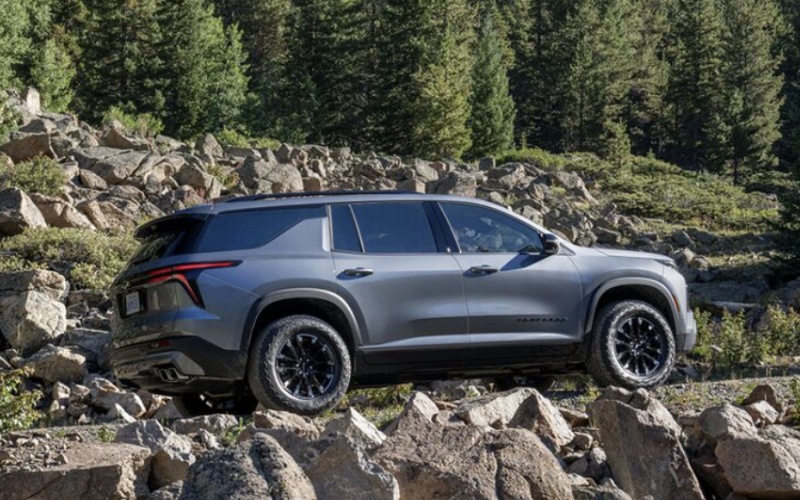
Jeff D’Ambrosio Chevrolet – Which three-row SUV carries more people and cargo with less fuss around Newark, DE: 2026 Chevrolet Traverse or 2026 Ford Explorer?
When families compare three-row SUVs, one question pops up again and again: which model actually gives you more usable people and cargo space without complicating daily life? That’s where the 2026 Traverse and Explorer square off. On paper, both deliver seven seats, strong power, and modern safety tech. But if your day-to-day around Newark, DE involves carpool rotations, sports gear, grocery runs, and the occasional long-weekend trip, the details inside each cabin matter more than a spec sheet headline. This guide breaks down the space and practicality story in plain terms so you can decide which one fits how you truly live.
We’ll start with seating. The Traverse is available with seating for up to eight, a simple distinction that can be a weekly lifesaver for bigger families, blended households, and anyone who occasionally shuttles extra teammates. The Explorer tops out at seven, which is fine until every seat is spoken for and someone is suddenly choosing between the last row and a friend’s car. If you know you’ll use the third row often, the Traverse’s Smart Slide Seats help keep access smooth, and available One-Touch Fold second-row seats make configuration changes feel more like a single tap than a wrestling match. It’s a small thing until you’re juggling a wheeled bag, a violin case, and a backpack at once.
What about cargo volume and loading ease?
For cargo, the difference is even clearer. With up to 98 cu. ft. of max cargo volume, Traverse leads its class, which shows up when you need to lay down both rear rows and bring home bulk items, a new bike, or bins for a move. Explorer’s 85.8 cu. ft. is a good number, but you’ll feel the gap if your weekend projects or hobbies tend to fill the cabin. The Traverse also adds a wide, flat load floor and storage solutions for the small items that normally roll around in back. For hands-free loading, Traverse offers an AutoSense Power Liftgate that opens when you approach—no kicking, no hunting for a sensor sweet spot. That’s a thoughtful touch after a big-box-store run or when your hands are full of field chairs and coolers.
Comfort and clarity matter, too. A standard 17.7-inch touch-screen in the Traverse puts mapping, media, and camera views on a crisp canvas. Paired with an 11-inch Driver Information Center, it reduces the up-and-down glance time when you’re scanning navigation and traffic updates. Google built-in means Google Assistant, Google Maps, and Google Play are part of the vehicle, so your voice commands and routes feel familiar from day one. Explorer’s interface has improved significantly and offers its own digital experience, but the Traverse’s large display and native Google integration feel like less work—and less setup—for busy households.
Driver assistance for highway time
If your routine includes stretches of I-95 or Route 273, hands-free assistance can transform those miles. Traverse offers available Super Cruise®, while Explorer offers available Ford BlueCruise. Both systems are designed for compatible highways and require driver attention, yet many shoppers prefer how clearly Super Cruise® communicates status through the light bar and driver display, as well as its growing network of compatible roads. Either way, adding a hands-free system can reduce fatigue during longer drives and weekend trips, making the third row a nicer place to be for everyone else.
On traction and control, each SUV aims to help you stay sure-footed when the weather turns or when the pavement ends. Traverse Z71 brings an Advanced Twin-Clutch AWD System that can send power side-to-side across the rear axle for improved grip in off-camber or split-traction scenarios. Explorer Tremor counters with a Torsen limited-slip rear axle and off-road tuning. Both approaches are useful; the twin-clutch system’s ability to meter torque more precisely can be an advantage in mixed-traction situations or when you’re managing a tight uphill curve with one side on wet leaves and the other on dry pavement.
What families ask us most
We get a steady stream of follow-ups from shoppers who want to understand real-life usability beyond specs. Below are quick, practical points to carry into your test drives.
- Seating flexibility: Traverse can be configured for eight; Explorer maxes at seven. If you regularly seat seven, having that occasional eighth spot is a stress reliever.
- Cargo capacity: Traverse’s best-in-class max cargo volume, flat load floor, and simple fold functions make bulk hauls easier.
- Loading ease: AutoSense Power Liftgate can open on approach, streamlining curbside and driveway routines.
- Display clarity: Traverse’s standard 17.7-inch screen keeps maps, media, and camera views large and legible.
- Hands-free confidence: Available Super Cruise® and available Ford BlueCruise both reduce long-drive fatigue—evaluate how each system communicates and fits your routes.
- Traction technology: Traverse’s available twin-clutch AWD and Explorer’s available Torsen LSD approach grip differently—test both on imperfect pavement if you can.
How to test-drive for space and comfort
Bring your real life to the dealership. Load the stroller, the sports gear, folding chairs—whatever you routinely carry. Move the second row forward and backward. Try the third-row access a few times. Fold the seats and confirm the load floor supports the items you bring most. Test the liftgate and camera views. Then do a loop that includes a tight U-turn, an uneven right turn from a stop, and a highway merge. This kind of route will surface differences in seat ergonomics, visibility, drivetrain calibration, and cabin noise you won’t catch on a short, smooth lap.
If you’re still torn after back-to-back drives, consider which interior layout takes pressure off your daily routines. That’s the quiet advantage you’ll feel every school day and on every weekend trip.
Frequently Asked Questions:
Can I get eight seats in both SUVs?
Traverse offers available eight-passenger seating; Explorer is configured for up to seven.
Do both offer hands-free highway assistance?
Yes. Traverse offers Super Cruise® and Explorer offers Ford BlueCruise on select trims. Both require driver attention on compatible roads.
Is towing the same?
Each can tow up to 5,000 lbs when properly equipped. Traverse includes trailering equipment standard for that rating; Explorer typically needs an added tow package.
Which one has the larger center screen?
Traverse includes a standard 17.7-inch diagonal color touch-screen across the lineup.
At Jeff D’Ambrosio Chevrolet, our team can help you compare trims and tech in a pressure-free way—serving Elkton, Newark, and West Chester so you can make a confident choice with your whole crew along for the test drive.
Request more 2026 Chevrolet Traverse information
Connect with us


